| Detail | Information |
|---|---|
| Prep Time | 15 minutes |
| Cook Time | 35 minutes |
| Chill Time | 4 hours (minimum) |
| Total Time | 4 hours 50 minutes |
| Yield | 4 standard (6–8 oz) ramekins |
| Difficulty | Intermediate |
| Intensity | Medium (patience & timing required) |
Intensity Breakdown
-
Effort Level: 2/5 – Easy steps, but careful with egg tempering.
-
Precision Required: 4/5 – Custard is forgiving; caramelizing is not.
-
Mess Factor: 2/5 – One bowl, one saucepan, ramekins.
Ingredients
For the Custard
-
2 cups (480 ml) heavy cream (36–40% milk fat)
-
5 large egg yolks (room temperature)
-
1/2 cup (100g) granulated sugar, divided (reserve 4 tsp for topping)
-
1 whole vanilla bean (or 2 tsp vanilla bean paste, or 1 tbsp pure vanilla extract)
-
Pinch of fine sea salt
For the Topping
-
4 teaspoons superfine sugar (or regular granulated sugar blitzed in a food processor)
Equipment Needed
-
4 ramekins (6–8 oz capacity)
-
2-quart saucepan
-
Fine-mesh strainer
-
Medium mixing bowl
-
Whisk
-
Kitchen torch (preferred) or broiler
-
Instant-read thermometer (optional but helpful)
Instructions
Phase 1: The Vanilla-Infused Cream (Intensity: Low)
-
Preheat your oven to 300°F (150°C). Arrange ramekins in a baking dish large enough to hold them without touching.
-
Prepare the vanilla bean: Using a paring knife, split the vanilla bean lengthwise. Scrape the tiny black seeds into a saucepan. Drop the pod in as well.
-
Heat the cream: Pour heavy cream into the saucepan with the vanilla seeds and pod. Heat over medium-low until you see small bubbles forming around the edge and steam rises (about 180°F/82°C if using a thermometer). Do not boil. Remove from heat, cover, and let steep for 15 minutes. Remove the vanilla pod (rinse and save for vanilla sugar).
Phase 2: Tempering the Egg Yolks (Intensity: Medium – Watch Closely)
-
Whisk yolks and sugar: In a medium bowl, whisk the egg yolks with 1/2 cup of the granulated sugar and a pinch of salt until the mixture is pale yellow, thick, and forms a “ribbon” when you lift the whisk (about 2–3 minutes).
-
Temper slowly: While whisking constantly, slowly drizzle about 1/2 cup of the warm cream into the egg mixture. This raises the egg temperature gradually. Then, whisk in the remaining cream in a slow, steady stream.
-
Strain: Pour the entire custard through a fine-mesh strainer into a clean bowl or large measuring cup (this removes any cooked egg bits or vanilla fibers). If using vanilla extract instead of bean, stir it in now.
Phase 3: Baking the Custards (Intensity: Low – Hands-off)
-
Fill ramekins: Divide the custard evenly among the four ramekins (about 1/2 cup each). If you see surface bubbles, pop them with a torch or by gently passing a flame over the top.
-
Hot water bath (alternative method): If using a water bath, pour boiling water into the baking dish until it reaches halfway up the sides of the ramekins. If skipping the bath (as this recipe allows at 300°F), simply place the baking dish on the center rack.
-
Bake for 30–35 minutes. The custards are ready when the edges are set but the center still jiggles like Jell-O – not like a liquid wave. A knife inserted 1 inch from the edge should come out clean.
-
Cool: Remove ramekins from the oven. Cool on a wire rack for 15 minutes, then refrigerate uncovered for at least 4 hours (or up to 3 days, covered with plastic wrap).
Phase 4: The Sugar Crust (Intensity: High – Fast & Furious)
-
Dry the surface: Remove custards from the fridge 10 minutes before torching. Pat the top with a paper towel if any condensation has formed.
-
Apply sugar: Sprinkle exactly 1 teaspoon of superfine sugar over each custard. Tilt and tap the ramekin to get an even, thin layer. Pour off any excess.
-
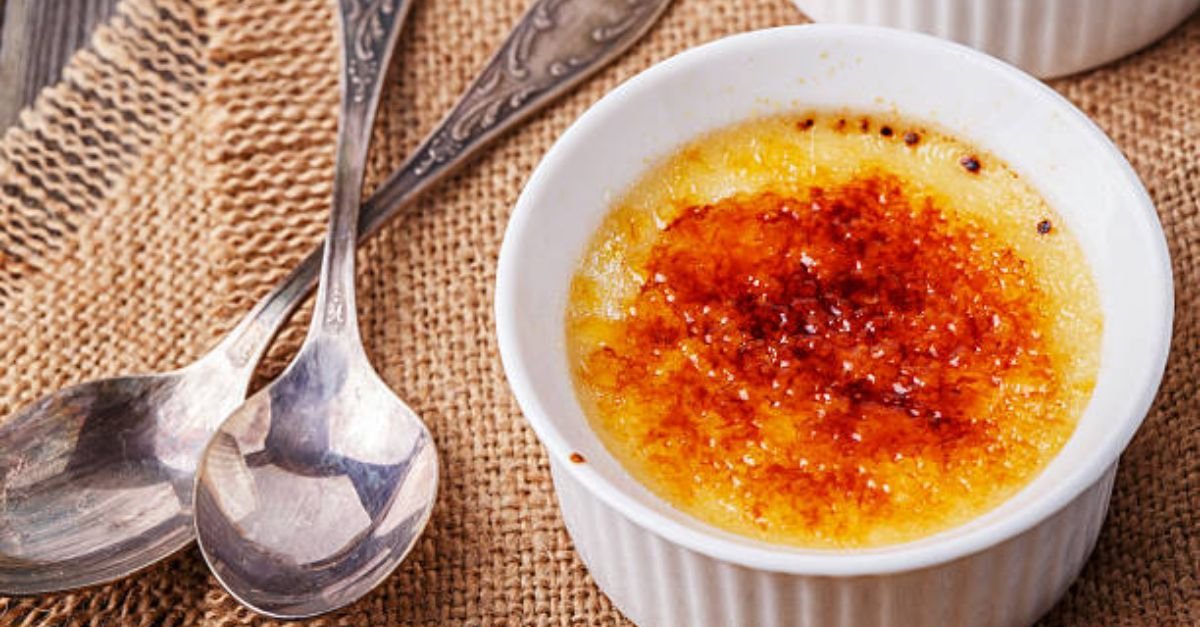
Caramelize with torch: Hold a kitchen torch 2–3 inches away from the surface. Move in small circles. The sugar will melt, bubble, then turn deep amber. Stop the moment it smells like caramel (15–20 seconds). Do not let it blacken.
-
Broiler method: Place ramekins on a baking sheet, 4 inches from a preheated broiler. Broil for 1–2 minutes, rotating halfway. Watch like a hawk – it burns fast.
-
-
Rest for 2 minutes. Let the topping harden into a glassy sheet. Serve immediately.
The Last of the Recipe: Chef’s Notes for Perfection
-
The “Jiggle” test is everything. Overbaked custard is grainy and weepy. Underbaked is soup. Trust the jiggle.
-
Chill fully. If the custard is even slightly warm, the sugar will melt into it instead of forming a crust.
-
Leftover egg whites? Make a small batch of financiers or add to an omelet.
-
No torch? A hot metal spoon (heated on a gas flame for 30 seconds) can caramelize small areas, but a torch is worth the $15 investment.
-
Flavor variations: Infuse cream with lavender, orange zest, or espresso beans. For chocolate, melt 2 oz dark chocolate into the warm cream.
Nutrition Information (Per serving, 1 ramekin)
Approximate values based on standard ingredients.
| Nutrient | Amount |
|---|---|
| Calories | 520 kcal |
| Total Fat | 42 g |
| Saturated Fat | 26 g |
| Trans Fat | 1 g |
| Cholesterol | 345 mg |
| Sodium | 70 mg |
| Total Carbohydrates | 32 g |
| Dietary Fiber | 0 g |
| Total Sugars | 31 g |
| Protein | 5 g |
| Vitamin D | 15% DV |
| Calcium | 8% DV |
| Iron | 4% DV |
| Potassium | 85 mg |
Note: Nutrition data is for a standard recipe using heavy cream and granulated sugar. Using low-fat cream or sugar substitutes will alter results and is not recommended for texture.
Storage & Make-Ahead
-
Custards (without sugar crust): Refrigerate tightly covered for up to 3 days.
-
With sugar crust: Best eaten within 30 minutes of caramelizing. The sugar will weep and soften if refrigerated after torching.
-
Freezing: Not recommended. Thawed custard becomes watery and separated.