-
Prep Time: 30 minutes
-
Marinating Time: 3 to 5 days
-
Cook Time: 3 hours 30 minutes
-
Total Time: 3 days, 4 hours
-
Intensity: Medium
-
Ingredient Prep: Medium (requires sourcing a few specialty ingredients like juniper berries)
-
Skill Level: Medium (straightforward process, but requires patience and careful gravy-making)
-
Active Time: 45 minutes (mostly for searing and making the gravy)
-
Ingredients
For the Marinade
-
2 cups red wine vinegar
-
2 cups dry red wine (such as a medium-bodied Pinot Noir)
-
2 cups water
-
1 large yellow onion, coarsely chopped
-
1 large carrot, peeled and coarsely chopped
-
1 leek, white and light green parts only, cleaned and sliced
-
10 whole black peppercorns
-
10 whole juniper berries
-
6 whole cloves
-
3 bay leaves
-
2 tablespoons kosher salt
-
1 tablespoon granulated sugar
For the Roast
-
3 to 4 lbs beef bottom round roast, or top rump roast
-
2 tablespoons vegetable oil or rendered bacon fat
-
1 large yellow onion, finely diced
-
2 tablespoons tomato paste
-
1 cup crushed gingersnap cookies (about 12-15 cookies, see note)
-
½ cup raisins (optional, but traditional)
-
Kosher salt and freshly ground black pepper, to taste
Note on Gingersnaps: The traditional thickener for Sauerbraten is Lebkuchen (German gingerbread) or gingersnaps. They add a subtle sweetness and a wonderful spiced flavor that perfectly balances the acidity of the marinade.
Instructions
Day 1-4: The Marinade
1. Prepare the Marinade: In a large, non-reactive pot (stainless steel or enameled cast iron), combine the red wine vinegar, red wine, water, chopped onion, carrot, leek, peppercorns, juniper berries, cloves, bay leaves, salt, and sugar. Bring the mixture to a boil, then reduce the heat and let it simmer for 5 minutes to allow the flavors to meld. Remove from the heat and let the marinade cool completely to room temperature.
2. Marinate the Beef: Place the beef roast in a large, non-reactive bowl, a large zipper-top bag, or a container just large enough to hold it. Pour the completely cooled marinade over the beef. The meat should be fully submerged. If it isn’t, add a bit more water and wine in a 1:1 ratio to cover.
3. Refrigerate: Cover the container and refrigerate for 3 to 5 days. This is the crucial step. Turn the roast over once a day to ensure even marinating. The longer it marinates, the more pronounced the sour flavor will be.
Day 5: The Roast
4. Remove and Dry: Remove the roast from the marinade, pat it completely dry with paper towels. Do not discard the marinade. Strain the marinade through a fine-mesh sieve into a large bowl or pitcher, pressing on the solids to extract all the liquid. Discard the solids and set the strained marinade aside.
5. Sear the Roast: Preheat your oven to 325°F (165°C). Pat the roast dry again with paper towels and season generously with salt and pepper. Heat the oil in a large Dutch oven or heavy-bottomed pot over medium-high heat. Carefully place the roast in the pot and sear on all sides until deeply browned, about 3-4 minutes per side. This builds a foundation of flavor. Remove the roast to a plate.
6. Build the Base: Reduce the heat to medium. Add the finely diced onion to the pot and cook until softened, about 5 minutes. Add the tomato paste and cook for 1 minute more, stirring constantly, until it darkens slightly.
7. Combine and Braise: Pour in about 2 cups of the strained marinade, scraping the bottom of the pot with a wooden spoon to deglaze and release any browned bits. Return the roast to the pot. The liquid should come about one-third to halfway up the side of the roast; add more marinade if needed. Bring the liquid to a simmer.
8. Braise: Cover the Dutch oven with a tight-fitting lid and transfer it to the preheated oven. Braise for 2 ½ to 3 hours, or until the meat is very tender and shreds easily with a fork. Turn the roast over halfway through the cooking time.
Final Step: The Gravy
9. Make the Gravy: Once the roast is tender, carefully transfer it to a carving board and tent it loosely with foil to rest. Place the Dutch oven on the stovetop over medium heat. Add the raisins (if using) and the crushed gingersnap cookies. Whisk continuously until the gingersnaps are fully dissolved and the gravy has thickened to a rich, silky consistency. This will take about 5-7 minutes. Taste the gravy and season with salt and pepper if needed. It should be a balanced sweet, sour, and savory.
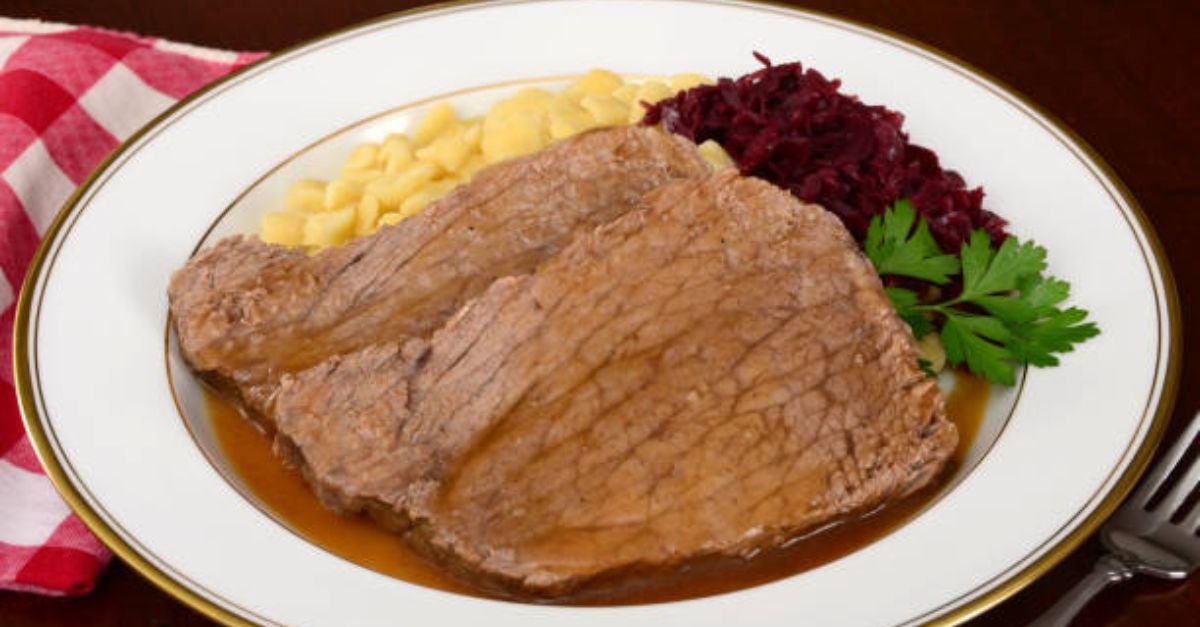
10. Serve: Slice the Sauerbraten against the grain into ½-inch thick slices. Arrange on a warm platter and pour a generous amount of the gravy over the top. Serve immediately with the remaining gravy on the side.
Nutrition
Nutrition information is an estimate provided for informational purposes only and should not be considered a guarantee. Values are based on a standard serving size of approximately 6 ounces of beef and ¼ cup of gravy. This analysis does not include optional raisins.
| Nutrient | Amount |
|---|---|
| Calories | 485 |
| Total Fat | 21g |
| Saturated Fat | 7g |
| Cholesterol | 145mg |
| Sodium | 720mg |
| Total Carbohydrates | 12g |
| Dietary Fiber | 1g |
| Sugars | 4g |
| Protein | 48g |
Note: The sodium content can vary significantly based on the salt used in the marinade and the type of gingersnaps used. The carbohydrate content is primarily from the gingersnap thickener.
Chef’s Notes & Tips
-
Patience is Key: The marinating time is non-negotiable for authentic flavor and texture. The acid in the marinade begins to break down the tough muscle fibers, which is why this dish works so well with an economical cut of beef.
-
Gingersnap Substitution: If you cannot find gingersnaps, you can use 3-4 crumbled Lebkuchen (German gingerbread) cookies. In a pinch, a mixture of ½ cup of crushed plain crackers (like saltines) with 1 tablespoon of brown sugar, ½ teaspoon of ground cinnamon, and ¼ teaspoon of ground cloves can work, though the flavor won’t be as authentic.
-
Make-Ahead: Sauerbraten is a fantastic make-ahead dish. Its flavor deepens after a day in the refrigerator. Prepare the entire dish, let it cool, and refrigerate. The next day, the fat will solidify on top of the gravy, making it easy to remove. Gently reheat the sliced meat in the gravy on the stovetop over low heat.