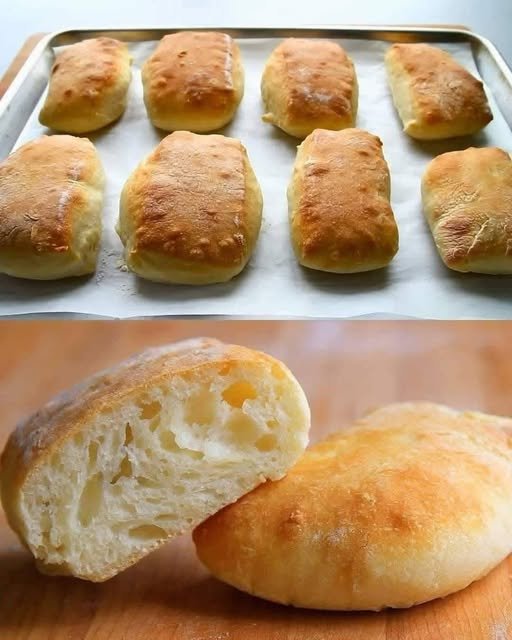
Yield: 2 large loaves
Active Prep Time: 30 minutes
Inactive Rise Time: 18-24 hours (mostly hands-off)
Bake Time: 20-25 minutes
Total Time: 18.5 – 24.5 hours
Cost per Loaf: Approx. $0.75 (versus $4-$6 bakery price)
Difficulty: Intermediate (due to handling a wet dough, but the process is simple)
Intensity: Low physical effort, high patience factor.
Ingredients:
-
500g (about 4 cups) All-Purpose Flour, plus extra for dusting: The cheap hero. No need for bread flour; AP flour’s moderate protein creates the perfect chew.
-
400-420g (1 ⅔ to 1 ¾ cups) Lukewarm Water: Key to the holes and chew. We’ll use the higher amount for a more open crumb.
-
7g (2 ¼ tsp) Instant Dry Yeast or Active Dry Yeast: One standard packet.
-
10g (1 ¾ tsp) Fine Sea Salt or Kosher Salt: Flavor booster and gluten strengthener.
-
Olive Oil or Rice Flour for dusting (optional): Rice flour prevents sticking better on the peel.
Equipment:
-
Large mixing bowl
-
Plastic wrap or damp kitchen towel
-
Bench scraper (highly recommended for handling wet dough)
-
Parchment paper
-
Baking sheet or pizza stone
-
Rimmed baking pan (for steam)
Instructions:
Day 1: Mixing & The Long, Slow Rise (5 minutes active)
-
Combine: In your large bowl, whisk together the flour and yeast. Add the salt to one side of the bowl (direct contact with salt can hinder the yeast initially).
-
Hydrate: Pour in 400g of the lukewarm water. Using a sturdy spoon or your hands, mix until a shaggy, sticky dough forms with no dry flour patches. If it seems very stiff, add the remaining 20g of water. The dough will be wet and messy—this is correct!
-
First Rest: Cover the bowl tightly with plastic wrap or a damp towel. Let it rest at warm room temperature (70-75°F) for 30 minutes.
Building Structure: The “Stretch and Fold” Method (15 minutes active, over 2 hours)
This replaces kneading and is crucial for strengthening the wet dough.
-
First Fold (After 30 min rest): With wet hands, grab one side of the dough, stretch it upwards, and fold it over the center. Rotate the bowl a quarter turn and repeat 4-5 times until you’ve gone around the bowl. The dough will become smoother and more cohesive. Re-cover.
-
Repeat: Perform this gentle stretch-and-fold sequence 3 more times, at 30-minute intervals (so, 30 min, 60 min, 90 min, and 120 minutes after the initial mix). You’ll feel the dough transform from a batter-like state to a smooth, elastic, yet still very sticky dough.
-
The Cold Ferment: After the final fold, cover the bowl tightly and place it in the refrigerator. Let it ferment slowly for 12-24 hours. This long, cold rise is the secret to developing the ciabatta’s complex, slightly tangy flavor.
Day 2: Shaping & Final Proof (10 minutes active, 1-2 hours inactive)
-
Prepare: Two hours before baking, take the dough from the fridge. It will have risen and be bubbly. Generously flour two large pieces of parchment paper (about 12×16 inches each) and place them on a flat surface like a baking sheet or peel.
-
Turn Out & Divide: Heavily flour your work surface and your hands. Gently pour/scrape the dough out onto the flour. Sprinkle the top with more flour. Using your floured bench scraper, divide the dough in half without pressing out the air.
-
Shape (Gentle!): Handling the dough as little as possible, use the bench scraper to coax each piece into a rough, oblong shape, about 9-10 inches long. Don’t overwork it; you want to preserve the gas bubbles. Carefully lift each piece onto a prepared parchment sheet.
-
Final Proof: Dust the tops lightly with flour and drape with a damp towel. Let proof at room temperature for 60-90 minutes, until puffy and full of visible bubbles just under the surface.
Baking: Creating the Perfect Crust (25 minutes active)
-
Preheat: At least 45 minutes before baking, place your baking sheet or pizza stone on a middle rack and a rimmed baking pan on the bottom rack. Preheat your oven to 475°F (245°C).
-
Score & Steam: Just before baking, use a razor blade or very sharp knife to make 2-3 shallow, diagonal slashes on the top of each loaf (optional, helps control expansion). Carefully slide the loaves (on their parchment) onto the hot baking surface. Immediately pour 1 cup of hot water into the preheated rimmed pan below to create a burst of steam. Close the oven door quickly.
-
Bake: Bake for 20-25 minutes, rotating halfway through, until the loaves are a deep, golden brown and sound hollow when tapped on the bottom. An internal thermometer should read 210°F (99°C).
-
Cool: Transfer the loaves to a wire cooling rack. This is the hardest step: let them cool completely for at least 1 hour. Cutting too soon releases steam and makes the crumb gummy.
Nutrition Information (Per 1/12th of a loaf, approximate):
-
Calories: 160 kcal
-
Total Fat: 0.5g
-
Saturated Fat: 0.1g
-
Cholesterol: 0mg
-
Sodium: 325mg
-
Total Carbohydrates: 33g
-
Dietary Fiber: 1g
-
Sugars: 0g
-
Protein: 5g
Note: Nutrition calculated using standard AP flour and does not include optional oil.
Baker’s Notes & Tips for Cheap Success:
-
Flour Power: If your AP flour seems weak, you can replace 50g with whole wheat flour for more strength and nutty flavor.
-
No Bench Scraper? A flexible spatula and VERY floured hands can work.
-
Steam is Key: The initial steam mimics a professional oven, allowing the bread to expand fully before forming a crisp crust. Don’t skip it.
-
Storing: Keep in a paper bag at room temperature for 1-2 days for best crust. For longer storage, freeze whole loaves in plastic bags for up to 3 months. Re-crisp in a 350°F oven for 10 minutes.
-
The “Cheap” Breakdown: A 5lb bag of flour (~$3) provides 4 batches. Yeast and salt are negligible costs. Your primary investment is time, which does all the heavy lifting to create an artisan product.
Enjoy your beautiful, budget-friendly ciabatta—perfect for sandwiches, dipping in olive oil, or simply slathered with butter, proving that the finest bread doesn’t come from a price tag, but from your own kitchen.